Paul’s Theology Validated By Rabbinic Sources
The claim that Paul’s theology is validated by rabbinic sources challenges the long-standing perception that Paul broke decisively with Judaism to create a new, Hellenistic religion. Instead, growing scholarly and midrashic evidence suggests that many of Paul’s key theological ideas have strong parallels in early Jewish thought, particularly within rabbinic and midrashic literature. Though Paul pointed these ideas toward Jesus as the Messiah, he did not invent them de novo. Rather, he reinterpreted existing Jewish concepts in light of his belief in Christ’s fulfillment of prophecy.
Paul’s View of the Law and the New Covenant
One of Paul’s most controversial teachings is that the Mosaic Law, while holy and good, is no longer the means of justification in the Messianic Age. This is rooted in his interpretation of Jeremiah 31:31–34, which speaks of a new covenant that is “not like” the covenant at Sinai. Crucially, this concept of a new (not merely renewed) covenant appears in rabbinic sources as well.
For example, Leviticus Rabbah discusses a future Messianic banquet involving the Leviathan and a great ox, where the animals are not slaughtered according to kosher law. The midrash resolves this by stating that “a new Torah will come forth in the Messianic era,” permitting what was previously forbidden. This aligns with Paul’s view that the old covenantal regulations are fulfilled and transformed in Christ.
Circumcision and Covenantal Validity
Paul’s dismissal of circumcision as necessary for salvation (e.g., Galatians 5:6) has often been seen as a rejection of Jewish identity. However, Lamentations Rabbah contains a striking parallel: in a dialogue between Abraham and God, Abraham asks whether the merit of circumcision can save Israel. God responds that circumcision is “worthless” because the people have sinned so grievously that the covenant has been rendered ineffective.
This midrashic idea—that covenantal signs like circumcision do not automatically confer salvation—mirrors Paul’s argument in Romans that faith, not ritual, is the basis of righteousness. Paul’s position, then, is not a Christian innovation but a radical application of a Jewish theological possibility.
Food Laws and the Messianic Age
Paul’s declaration that “nothing is unclean in itself” (Romans 14:14) and his acceptance of Gentile believers eating non-kosher food were deeply controversial. Yet midrashic literature also anticipates changes in dietary laws during the Messianic age.
The Midrash on Psalms (Midrash Tehillim) explicitly states that in the world to come, God will permit the consumption of unclean animals. One explanation given is that the dietary laws were a test in the old covenant, but in the new era, such distinctions will no longer apply. This supports the view that Paul’s theology reflects existing Jewish eschatological expectations, even if he uniquely identifies Jesus as the one who inaugurates this new age.
Paul’s Exegetical Methods and Rabbinic Hermeneutics
Paul’s interpretation of Scripture often follows patterns seen in rabbinic exegesis. Scholars such as H. St. John Thackeray and A. F. Pukko have demonstrated that Paul employs Hillel’s seven middot (principles of rabbinic interpretation), including gezerah shavah (verbal analogy) and binyan av (building a principle from a scriptural precedent).
For example, in 1 Corinthians 10:1–11, Paul interprets the wilderness generation’s experiences as types (typos) for Christian instruction—a method akin to midrashic haggadah. This shows that Paul operated as a Jewish teacher using familiar interpretive tools, even as he applied them christologically.
Paul’s exegetical methods, deeply rooted in his Pharisaic training, heavily employed Jewish hermeneutics, including techniques similar to Hillel’s Seven Rules, midrash, typology, and allegory to interpret the Old Testament. He adapted these traditional methods to center on the Messiah, using them to interpret Scripture through the lens of Christ’s resurrection.
Key aspects of Paul’s hermeneutics include:
- Rabbinic Influence: As a “Hebrew of Hebrews” and former Pharisee, Paul used techniques found in Second Temple Judaism, such as Gezera Shawa (linking texts with similar words) and Qal Va-Chomer (lighter/weightier arguments).
- Midrashic Style: Paul employed a midrashic, or inquiry-based, approach to interpret biblical passages to form community doctrine.
- Typological and Allegorical Interpretation: Paul viewed Old Testament events (e.g., the wilderness, the rock in 1 Cor 10) as prototypes of Christian reality.
- Christocentric Shift: While utilizing standard Jewish interpretive tools, Paul differed from his contemporaries by making the life, death, and resurrection of Jesus the ultimate key to interpreting the Old Testament.
Paul’s training under figures like Gamaliel directly influenced his approach, which he utilized to argue for justification by faith in Christ, such as in his exposition of Abraham in Romans 4.
Theological Continuities and Divergences
While Paul shares many ideas with rabbinic Judaism—such as vicarious suffering, the universality of sin, and the coming of a new age—his central claim that Jesus is the divine Messiah who died and rose for salvation is the critical divergence. As scholar Hans Joachim Schoeps noted, Paul reconfigures Jewish concepts into a soteriology centered on a God-Man, a notion absent in rabbinic sources.
Yet even here, there are echoes: the Binding of Isaac (Akedah) is interpreted in midrash as a sacrifice whose merit intercedes for Israel—a concept that may have shaped early Christian views of atonement. Paul’s innovation lies not in the components of his theology, but in their christological synthesis.
Paul’s theology displays strong continuity with1st-century Judaism, particularly in his reliance on scripture, monotheism, and apocalyptic framework, while introducing radical divergences focused on Christ-centered salvation, the inclusion of Gentiles, and a shift from Torah-based covenantal identity to justification by faith alone.
Continuities with Judaism and the Old Testament
- Scriptural Authority: Paul’s arguments are deeply rooted in Jewish scriptures and contemporary Jewish thought.
- Apocalyptic Structure: He maintains a Jewish apocalyptic worldview, focusing on God’s intervention, cosmic struggles, and the “present evil age” vs. the “age to come”.
- Ethical Foundation: Paul retains Jewish moral and ethical standards (e.g., prohibition of idolatry, emphasis on love).
- Covenantal Logic: He works within the Jewish framework of covenantal nomism, but transforms it by focusing on grace rather than legalistic merit.
Divergences from Second Temple Judaism
- Christ-Centered Focus: Paul’s gospel diverges in its exclusive focus on Jesus as the resurrected “Son of God” and Lord, which he saw as a new revelation.
- Justification by Faith: Instead of membership in the covenant being maintained by “works of the law” (circumcision, dietary laws), Paul argues for inclusion through faith in Christ alone.
- Gentile Inclusion: Paul asserts that Gentiles do not need to convert to Judaism (i.e., keep the Law) to be part of the people of God.
- Role of the Torah: While respecting the Law as holy, Paul teaches that it is no longer the defining boundary marker or path to righteousness, as the Messiah has fulfilled its purpose.
Continuities and Divergences with the Jesus Tradition
- Similarity: Paul emphasizes the cross and resurrection, which are central to the gospel tradition. He also, to some extent, incorporates ethical teachings similar to those in the Gospels.
- Distinction: Paul focuses heavily on the theological significance of the risen Christ rather than the parables and miracles of the earthly Jesus. His focus is on the “theology of the cross” and the “body of Christ” as the church, which developed post-resurrection.
Note: Some interpretations (e.g., New Perspective on Paul) argue that Paul did not oppose Judaism for being legalistic, but rather for its exclusive boundary markers (circumcision, food laws) that separated Jews from Gentiles.
Conclusion: Paul Within First-Century Jewish Thought
Far from being an apostate who invented Christianity, Paul emerges as a first-century Jewish thinker deeply rooted in Pharisaic and apocalyptic traditions. His theology—on the Law, circumcision, food, and eschatology—finds striking parallels in early rabbinic and midrashic sources, suggesting that his ideas were not alien to Jewish thought, even if they were ultimately rejected by mainstream Judaism.
The claim that Paul’s theology is validated by rabbinic sources does not mean rabbinic Judaism endorses Christianity, but rather that the theological soil from which Christianity grew was authentically Jewish. Paul did not abolish the Torah; he proclaimed, in Jewish terms, that it had reached its fulfillment in Christ.
What Does The KJV Bible Say?
Paul’s theology, as presented in the King James Version (KJV), is deeply rooted in his training as a Pharisee under Gamaliel (Acts 22:3) and often aligns with, or directly employs, rabbinic methods of exegesis and theological concepts common to Second Temple Judaism. While Paul is often viewed as breaking with Judaism, scholars argue his thought was a “fulfillment” of it, utilizing rabbinic interpretive traditions—such as those found in the Midrash, Targums, and Talmud—to explain the messianic role of Jesus.
Rabbinic Validation of Pauline Theology (KJV)
The following table demonstrates parallels between Pauline theology (KJV) and Rabbinic sources.
| Pauline Theme (KJV) | Key KJV Scripture | Rabbinic/Jewish Parallels |
|---|---|---|
| Justification by Faith | Romans 3:28 “…a man is justified by faith without the deeds of the law.” | While rabbis stressed Torah study, some traditions recognized that Abraham’s belief in God (Gen 15:6) was considered as righteousness, emphasizing faith in God’s promise. |
| Two Adams (Old/New) | 1 Cor 15:45-47 “The first man Adam was made a living soul; the last Adam was made a quickening spirit.” | Rabbinic tradition often discussed the “first Adam” (flesh) and a “last Adam” (the Messiah or the restored righteous) who would bring the world to perfection. |
| The “Evil Inclination” (Yetzere Hara) | Romans 7:18-19 “For I know that in me… dwelleth no good thing… the evil which I would not, that I do.” | Talmudic literature heavily discusses Yetzer Hara (the evil inclination) that dwells within man, struggling against the good inclination, requiring divine aid. |
| Resurrection of the Dead | 1 Cor 15:20 “But now is Christ risen… and become the firstfruits of them that slept.” | Pharisaic Judaism (Acts 23:6-8) believed in the resurrection of the dead; Paul viewed Christ’s resurrection as the inauguration of this promise. |
| Divine Mercy on Gentiles | Rom 11:32 “For God hath concluded them all in unbelief, that he might have mercy upon all.” | Midrashic traditions, such as the hope for the “Ingathering of the Exiles,” included the inclusion of nations (Gentiles) in the end times under the rule of the Messiah. |
| Torah as “Bondage” (If misunderstood) | Galatians 3:24 “Wherefore the law was our schoolmaster to bring us unto Christ…” | While not saying the law is evil, Paul uses a pedagogical approach (“schoolmaster”) similar to rabbinic discussions on the purpose of the law to limit sin until the era of the Messiah. |
| The “Body of Christ” | 1 Cor 12:12 “For as the body is one, and hath many members… so also is Christ.” | A parallel to the Jewish concept of Knesset Yisrael (the community of Israel) being a single, organic entity. |
| Use of Midrash (Allegory) | Galatians 4:22-26 (Story of Sarah and Hagar) | Paul uses Midrashic techniques (specifically Doreshei Reshumot), finding allegorical meaning in historical, literal narratives to illustrate spiritual realities. |
Key Observations
- Rabbinic Methods: Paul often uses Rabbinic interpretive techniques (Midrash) to argue that the Old Testament Scriptures pointed to Jesus.
- Pharisaic Background: Paul’s arguments about resurrection, the existence of angels, and his ethical focus are consistent with his identity as a Pharisee, even after his conversion.
- Conflict with Legalism: Paul’s main conflict was not with the Law itself, but with the idea that salvation is attained through “works of the law” (legalism/ritualism) rather than faith.
As You seek understanding and clarity in your life you should always turn to your Heavenly Father for Guidance
Table of Contents
- Youtube Video (Todays Message)
- Are You Your Own Worst Enemy?
- Women are looking for a fathers love
- Spiritual Order – In The Family and Church
- How God Commands Us To Forgive Those Who We Have Resentment Toward
- Join Our Newsletter
- Top Seven Articles
- Our Mission Statement
- Our Vision
- Tithing And Giving!
When Tithing please give what you feel is good to the amount we are helping you in your spiritual life.

Here is a YouTube video to help theses who need to understand someone explaining the important message, the YouTube video is called, “Paul’s Theology Validated By Rabbinic Sources”, This video is with Wes Huff YouTube Channel:
Note: MadeManMinistries.com has no relations with Wes Huff YouTube Channel, but MadeManMinistries.com enjoys sharing the word.
Note: We do use YouTube Video’s under the “Fair Use” Act under the Copyright Law:
“Fair use is a doctrine in the United States copyright law codified in Section 107 of the Copyright Act of 1976.1 It provides for the legal, non-licensed citation or incorporation of copyrighted material in another author’s work without requiring permission from the rights holders, such as for commentary, criticism, news reporting, research, teaching or scholarship.01 The U.S. Copyright Office Fair Use Index should prove helpful in understanding what courts have to date considered to be fair or not fair but it is not a substitute for legal advice.2“

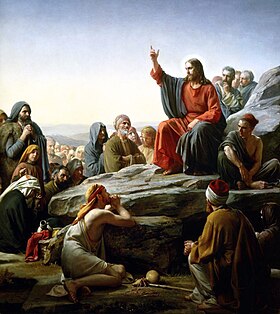
This is a major important point about forgiveness
Leave there thy gift before the altar, and go thy way; first be reconciled to thy brother, and then come and offer thy gift. -MATTHEW 5:24 KJV
Are You Your Own Worst Enemy?
I would start out by saying what Jesus Christ would want us to do? Pray and how should we pray? The Lord’s Prayer, and how often should we pray? Continually. Why do we use the Lord’s Prayer and not some other? The Lord’s Prayer covers all the areas that is important for our spiritual being.
When we pray the Lords prayer we ask to forgive our enemies, let God’s will be done, the kingdom to come. By praying the Lord’s prayer we let go of many thoughts we have in our head and give them back to God so we can have things revealed to us.
We must overcome resentment in our heart, and in a past video I shared about Dr. Jordan Peterson talks about how resentment can destroy us and we become our own very worst enemy and Jordan goes on to say that we must talk to people what we have resentment toward to overcome that resentment. Other people who lived in the past who talked about this is Jesus Christ and someone who is living now who talks about this daily is Brother Augustine, Dr. John MacArthur, Dr. Charles Stanley, Rev. John Piper and Pastor Paul Washer.
Women are looking for a fathers love
Women are looking for a fathers love. Its important that men understand women are looking for a fathers love and not get screwed. Woman more than anything are looking for a strong spiritual man to lead the future (the family). I think in many YouTube videos on biblical teachings, how young women are being hurt by men that are just looking to get laid instead of doing right and being in Christ and setting a good example of a strong man. We must be in Christ, hate no one, love all, forgave theses we resent, love what is right and support people who are walking with God.
Women need their fathers in their lives to be strong man to be good examples and not BETA men or weak examples of what a man should be. Its important that a man leads the way as Christ leads men, we as man need to fellow Jesus Christ to keep society from going to HELL.
Every day you can see or people watch how some men and women our living in hell without the right spiritual order then you will continue your hellish way according to 2 Peter. You can also find it in Romans. God will give you over to a reprobate mind.
And even as they did not like to retain God in their knowledge, God gave them over to a reprobate mind, to do those things which are not convenient. – Romans 1:28 (KJV)
In Romans 1, Paul refers to something known as a reprobate mind. If you’re not familiar with the term reprobate, the literal definition in the Greek is failing to pass the test, unapproved, counterfeit.
Spiritual Order – In The Family and Church
God the father
Jesus Christ
Father (Men over women)
Mother (Women over children)
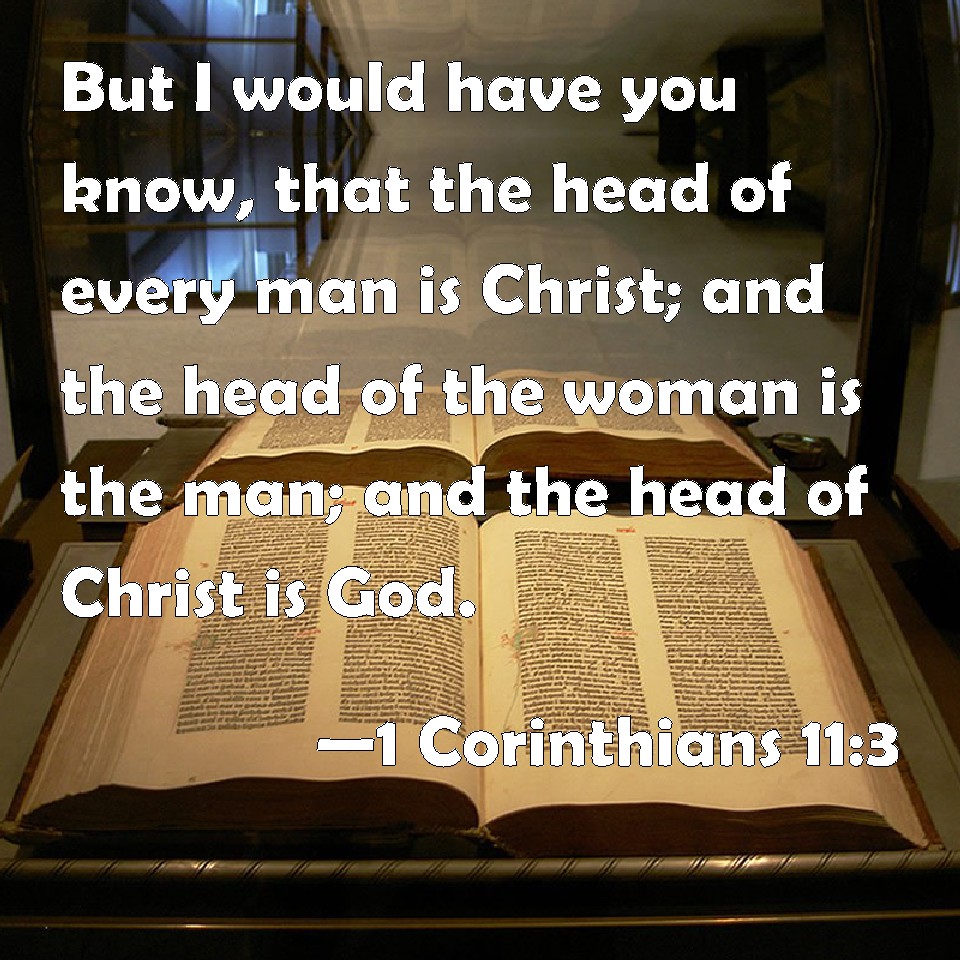
Here is Book, Chapter and Verse from the Kings James Version 1 Corinthian 11:2-16, But the main message is in 1 Corinthian 11:3: “3 But I would have you know, that the head of every man is Christ; and the head of the woman is the man; and the head of Christ is God.”
A Woman Conferring The Spiritual Order According to Saint Paul And How The War On The Family Is Being Wage:
How You Treat People Is Who You Are! On Judgement Day You Will Be Judged How You Treated The Less Fortunate (Open Letter)
New Social Contract To Save The West!
Should America And The Western World Have A New Social Contract? (Open Letter)
Father’s Rights
GARBAGE GENERATION

GARBAGE GENERATION By Daniel Amneus
$15.95 Price Check Ebay.com
Daniel Amneus – The Garbage Generation.pdf Link
Back to Patriarchy!

Back to Patriarchy! by Daniel Amneus
$29.95 Price Check Ebay.com


Check out our newest website CIPADS.com place ads for business, jobs, real estate or another site like craigslist
How God Commands Us To Forgive Those Who We Have Resentment Toward.
All of us are tested everyday by our personal internal struggle coming from resentment of what happened earlier in our lives as children typically what our mother did to us, telling how our fathers were not good enough or driving us away from our fathers when we were children. We most go to the people that we have resentment against and forgive them. By forgiving our mothers or whoever we have resentment against, God will forgive us and we can return to the heavenly Father through our Lord and Savior Jesus Christ.
It was said if you don’t love everyone then you love no one. People today live like the Old Testament people did. We must forgive and love everyone as God Commanded us to do according to Matthew 22:34-40.
After Reading The Passage I would Recommend Doing A Silent Prayer
Its is said: Be still, and know that I am God: I will be exalted among the heathen, I will be exalted in the earth. Psalm 46:10 King James Version (KJV)

Jesus is an example of a Fathers loves
Join Our Newsletter
Top Seven Articles
- The Problem With Older Women Liking/Dating Younger Men
- I Dream A Dream That All Men Would Have Love For One Another
- IF by Rudyard Kipling (A Life Changing Poem)
- HOW to be PERFECT… According to Jesus Matthew 5:43-48
- Let Women Come To You
- The Willful Submission of a Christian Wife (Ephesians 5:22-24)
- The Greatest Mistake Man Has Ever Made?
The List Children Of The Lie!!
The List Children Of The Lie!!
People of the Lie : The Hope for Healing Human Evil
Average Rating: (3.6) stars out of 5 stars
$17.93 Buy now price check at Walmart
Special Articles:
Who Was Jezabelle In The Bible?
Is Malachi An Indictment Against Mankind?
What does the Bible say about breaking generational curses?
Its Time To Repeal Women’s Rights To Contact Your Elected Official
Is It Time To Establish Israel/The New Jerusalem As Head Of The World
The Terrifying Truth About The Antichrist
Sexual Revolution, Perverted Revolution, Then Reprobates
Are The Black Hebrew Israelites The Synagogue of Satan Accusation in Revelation 2:9?
A Wife Should Be “A Mirror” To Her Husband?
Heretic Series/Beware Of The Wolf In Sheeps Clothing
Is The Mormon Church Heretics? Of Arianism Heresy
Is Rev. Robert W. Lee A Heretic?
Does Gino Jennings Know Hes a Heretic? Of The Arianism Heresy Part Two
Is Islam And All Muslims Heretics? Of Arianism Heresy
Is Gino Jennings A Heretic? Of Arianism Heresy
Is Jesse Lee Peterson A Heretic? Of Arianism Heresy
Who Are the 5 percenter or 5%? Are They Heretics
Who Is Billy Carson? Why Does Billy Teach A Different Gospel Of Our Lord Jesus Christ?
In a world where it is so easy to forget the importance of God, we must remember that He is holy and will not share His glory. America has forgotten this truth and it is time for us to re-examine our relationship with God and recognize that He is the one true God who deserves our full devotion and reverence. We must remember that He will not be taken lightly or ignored, but rather should be honored as the Creator of all things. Only then can we truly experience His love and grace in our lives.
America Has Forgotten! That God The Father Is Holy And He Will Not Share His Glory!
God Reveals Himself
Click the link about a PDF how God reveals himself to you: God Reveals and Satan Speaks to you!
Our Mission Statement
Uniting men of good character who, though of different ethnic or social backgrounds, share a belief in the fatherhood of God and the brotherhood of mankind. Bring Men back to the Father and sharing the biblical view of the Heavenly Father.
Our Vision
By returning to our heavenly father God thru the Lord and Savior Jesus Christ we can rebuilt the family, once the man is recognized as the head of the family and household. Partner with us as we develop a community, mission, and leadership support for the men of today.
Now is the time for a new movement of men. As brothers, fathers let’s become who we’re created to be, knowing our identity, purpose, and destiny in Christ. Then let’s do, linking arms to change the world for good … and for God. Help bring transformation and revival to our families, churches, and communities.

Tithing And Giving!
When Tithing please give what you feel is good to the amount we are helping you in your spiritual life. We are a for profit Ministry meaning we take all profits or donations and give it back to the community we service. Please visit our sponsors down below or along the side of the website, Thanks.

Save Up To 60% Off Hotels, Flights, Cruises, Rental Cars
Conclusion
Hope this post was helpful to you and that you have a very successful Daily Bible Study with your friends and family! Check out the other sections of my blog for more tips on MadeManMinistries.
Please visit our Sponsors: